

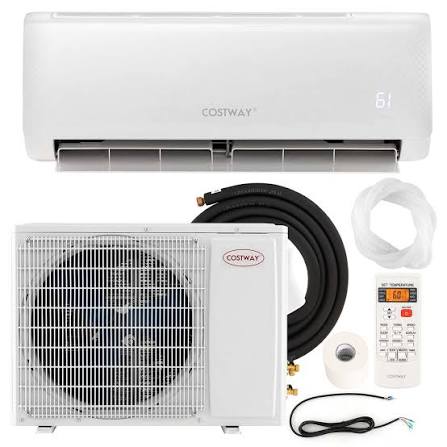
Split Air Conditioner Price in Sri Lanka: Best 2026 Buying Guide
When people search for split air conditioner price in sri lanka, they usually want more than a single number. They want to know which BTU size fits a bedroom, whether inverter ACs are worth the extra cost, how much installation may add, and what running cost to expect on a Sri Lankan electricity bill. From my experience comparing AC options for homes, apartments, small offices, salons, and shops in Sri Lanka, the best purchase is rarely the cheapest unit. It is the unit that matches your room size, daily usage, service access, and budget.
Split Air Conditioner Price in Sri Lanka
Split air conditioner price in Sri Lanka usually starts around LKR 115,000–160,000 for basic 12,000 BTU non-inverter models and can rise above LKR 250,000–315,000 for higher-capacity or premium inverter models. Final cost depends on BTU size, brand, inverter technology, refrigerant type, warranty, installation, copper piping, and seasonal offers.
Table of Contents
- What affects split air conditioner price in Sri Lanka?
- Typical split AC price ranges in Sri Lanka
- Split AC comparison table by BTU size
- Inverter vs non-inverter split AC price in Sri Lanka
- How to choose the correct BTU size
- Installation costs and hidden charges
- Energy efficiency and electricity bill impact
- Buying checklist for Sri Lankan homes
- People Also Ask
- Expert Q&A
- Conclusion
What affects split air conditioner price in Sri Lanka?
The split air conditioner price in sri lanka changes because several cost factors work together. Therefore, two ACs with the same 12,000 BTU label may not cost the same. One may be a simple non-inverter unit, while the other may include inverter technology, R32 refrigerant, Wi-Fi control, anti-corrosion outdoor coating, and a longer compressor warranty.
The biggest factor is cooling capacity. In Sri Lanka, common residential split AC sizes include 9,000 BTU, 12,000 BTU, 18,000 BTU, and 24,000 BTU. A smaller bedroom in Colombo, Kandy, Galle, Kurunegala, or Negombo may only need 9,000–12,000 BTU. However, a larger living room, showroom, restaurant cabin, or office area may need 18,000–24,000 BTU.
Another factor is the compressor type. Inverter split air conditioners usually cost more at the start. However, they can be better for people who use the AC for long hours, especially at night. A non-inverter AC often costs less upfront, yet it switches the compressor on and off more aggressively. As a result, it may consume more electricity during long daily use.
Brand positioning also matters. Premium brands and high-end models usually cost more because they may offer better build quality, quieter operation, better after-sales support, and stronger warranties. However, many mid-range brands now offer good value for Sri Lankan homes, especially when supported by a reliable local seller.
Finally, the actual installed cost may differ from the displayed product price. Installation, extra copper pipe, brackets, drainage work, electrical wiring, wall core cutting, and transport can add to the total. So, when comparing split air conditioner price in Sri Lanka, always compare the full package, not only the product sticker price.
Typical split AC price ranges in Sri Lanka
Based on current local retail signals, entry-level split AC prices in Sri Lanka often begin near LKR 115,000–160,000 for selected 12,000 BTU non-inverter models. Meanwhile, many 12,000 BTU inverter models sit around LKR 180,000–250,000, depending on brand and promotion. Larger 18,000 BTU and 24,000 BTU models usually move higher, especially when inverter technology and R32 refrigerant are included.
For example, Greenware listings recently show split AC options such as Hisense 12,000 BTU non-inverter units around the lower end of the market and Midea inverter R32 split AC models at higher price levels. These figures can change with exchange rates, import costs, stock availability, and card payment promotions. Therefore, treat every range in this guide as an estimate, not a fixed quotation.
A practical way to think about price is to group ACs into three buyer levels.
Budget buyers usually want the lowest reliable cooling cost for a bedroom or small office. They often compare non-inverter 12,000 BTU models. These are suitable when the AC is used occasionally, such as a few hours on hot nights.
Value buyers often choose 12,000 BTU or 18,000 BTU inverter models. They pay more upfront but expect smoother cooling, quieter operation, and better long-hour efficiency.
Premium buyers may look for 18,000 BTU or 24,000 BTU inverter models, modern panels, Wi-Fi control, high star ratings, R32 refrigerant, and stronger warranty terms. These buyers are usually cooling larger rooms or using the AC daily.
Split AC comparison table by BTU size
The table below gives a practical comparison for Sri Lankan buyers. Prices are estimated market ranges and can vary by brand, stock, installation, and promotions.
| Split AC size | Best for | Estimated unit price range | Typical buyer | Key note |
| 9,000 BTU | Small bedrooms, study rooms | LKR 105,000–180,000 | Light users | Good where heat load is low |
| 12,000 BTU | Bedrooms, small living rooms, offices | LKR 115,000–250,000+ | Most home buyers | Most searched and widely available size |
| 18,000 BTU | Larger bedrooms, living rooms, shops | LKR 190,000–305,000+ | Medium to heavy users | Better for larger spaces and daytime use |
| 24,000 BTU | Large halls, open living areas, commercial spaces | LKR 235,000–315,000+ | Heavy users | Needs careful installation and wiring |
This table also explains why the split air conditioner price in sri lanka can look confusing online. A 12,000 BTU non-inverter unit may appear much cheaper than a 12,000 BTU inverter unit. However, the lower product price does not always mean the lower long-term cost.
Inverter vs non-inverter split AC price in Sri Lanka
One of the most important decisions is inverter vs non-inverter. Inverter air conditioners adjust compressor speed based on the cooling load. As a result, they can maintain a steadier temperature instead of repeatedly switching the compressor fully on and off.
Non-inverter ACs are simpler and usually cheaper. They can still be a good choice for occasional use, rental rooms, guest rooms, or budget-sensitive buyers. However, if you use AC for six to eight hours most nights, an inverter split AC may be more sensible.
In Sri Lanka, electricity cost matters because many homes already use refrigerators, fans, washing machines, water pumps, and other appliances. The Public Utilities Commission of Sri Lanka electricity tariff updates are useful for understanding that electricity tariffs can change over time. Therefore, AC buyers should consider running cost, not only product price.
Here is a simple comparison.
| Feature | Non-inverter split AC | Inverter split AC |
| Upfront price | Usually lower | Usually higher |
| Long-hour efficiency | Lower in many use cases | Better in many use cases |
| Cooling style | On/off compressor cycling | Variable compressor speed |
| Noise comfort | Can fluctuate more | Often smoother and quieter |
| Best for | Occasional use | Daily or long-night use |
| Buyer priority | Low initial price | Lower long-term running cost |
From my experience, Sri Lankan buyers who use AC only during the hottest months may accept a non-inverter unit. However, households that use AC almost every night should compare inverter models carefully. The higher upfront price may feel heavy, but the comfort and possible energy savings can be worth it over time.
How to choose the correct BTU size
Choosing the wrong BTU size is one of the most common mistakes when comparing split air conditioner price in Sri Lanka. A smaller AC may run continuously and still fail to cool the room. Meanwhile, an oversized AC may cool quickly but may not remove humidity well, which can make the room feel cold but damp.
For many Sri Lankan bedrooms, 12,000 BTU is a popular choice. However, room size is not the only factor. You should also consider ceiling height, direct sunlight, roof heat, number of occupants, glass windows, curtains, electrical equipment, and whether the room is upstairs.
For example, a 120 sq. ft. bedroom with shaded windows may work well with 9,000–12,000 BTU. However, the same size room under a hot slab roof with afternoon sun may need stronger cooling. Similarly, a small office with computers and several people may need more capacity than a bedroom of the same size.
A technician should inspect the room before final selection. This is not legal or engineering advice; it is practical administrative support for choosing a home appliance. For commercial premises, get a qualified AC technician or building services professional to calculate the cooling load.
Installation costs and hidden charges
The listed split air conditioner price in sri lanka may not include every installation cost. Many sellers offer standard installation packages, but these packages usually have limits. For example, the quoted price may include only a certain length of copper pipe, basic bracket fitting, and standard drainage.
Extra costs may apply when the indoor and outdoor units are far apart. Additional copper piping can increase the bill. If the outdoor unit needs a special bracket, roof access, scaffolding, or long electrical wiring, the cost can also rise. Moreover, apartments may require building management approval before drilling or placing outdoor units.
Here are common add-ons to ask about before paying:
- Extra copper pipe per foot or metre
- Outdoor unit bracket charges
- Wall core cutting charges
- Electrical wiring and isolator cost
- Drain pipe extension cost
- Transport charges outside the seller’s normal delivery zone
- Warranty conditions after third-party installation
- Service charges after the free service period
A transparent seller should explain these before installation day. Therefore, when you compare two AC quotes, ask both sellers for a full installed estimate. A cheaper product price can become more expensive after add-ons.
Energy efficiency and electricity bill impact
Energy efficiency is a major reason to look beyond the cheapest AC. The Sri Lanka Standards Institution energy labelling page explains that energy efficiency rating labels help consumers understand appliance performance and compare models. It also identifies single split type room air conditioners as a product category under energy efficiency rating labels.
In addition, the Sri Lanka Sustainable Energy Authority standards information notes that air conditioner labelling work is part of broader energy efficiency activity in Sri Lanka. This matters because an AC is not a one-time cost. It is a monthly electricity cost.
For split type room air conditioners, the Sri Lanka Standard for energy efficiency rating refers to Specific Cooling Capacity, cooling capacity, power consumption, and star ratings. In simple language, a more efficient AC gives more cooling for each unit of electricity. Therefore, a higher-efficiency unit can be a better long-term choice, especially in homes where the AC runs daily.
Still, energy savings depend on real use. An inverter AC will not save much if doors are left open, filters are blocked, sunlight enters through uncovered glass, or the temperature is set too low. For Sri Lankan homes, a comfortable setting around 24–26°C often gives a better balance between comfort and electricity use than setting the AC very low.
How Sri Lankan climate affects AC choice
Sri Lanka has warm and humid weather across much of the year. Coastal areas such as Colombo, Negombo, Galle, Matara, Trincomalee, and Batticaloa can feel hotter because humidity reduces comfort. Inland and hill-country areas may need less AC, but heat can still be uncomfortable in upstairs rooms and poorly ventilated houses.
Humidity is important because air conditioners do two jobs: cooling and dehumidifying. A properly sized split AC removes heat and moisture from the indoor air. Therefore, a unit should not be chosen only by room size. It should also match humidity, sunlight, and occupancy.
For upstairs bedrooms, roof insulation and curtains can reduce cooling load. For living rooms, closing doors to unused spaces helps. For shops and offices, door traffic matters because warm outside air enters every time customers or staff walk in.
Brands and features to compare
Many Sri Lankan buyers compare brands first. Brand matters, but features and after-sales support matter just as much. A good AC brand without proper installation can perform badly. Likewise, a mid-range AC installed correctly can deliver reliable comfort for years.
When checking split air conditioner price in Sri Lanka, compare these features:
- BTU capacity
- Inverter or non-inverter compressor
- Refrigerant type, such as R32
- Energy efficiency rating
- Indoor noise level
- Outdoor unit coating
- Compressor warranty
- PCB warranty
- Availability of spare parts
- Local service network
- Installation quality
- Return and replacement policy
R32 refrigerant is common in newer AC models. It is often marketed as more environmentally friendly than older refrigerants. However, buyers should still focus on the full product specification, energy rating, and service support.
Buying checklist for split air conditioner price in Sri Lanka
Use this numbered checklist before you buy.
- Measure the room. Note length, width, ceiling height, window size, and direct sunlight.
- Estimate the heat load. Consider people, computers, roof heat, cooking heat, and glass exposure.
- Choose the BTU size. Do not buy only because a model is on promotion.
- Compare inverter and non-inverter models. Match the choice to your daily usage pattern.
- Check the energy label. Look for efficiency information, star rating, and power input.
- Ask for the full installed price. Include copper pipe, bracket, wiring, drilling, and transport.
- Confirm warranty terms. Ask what covers the compressor, PCB, indoor unit, and outdoor unit.
- Check after-sales support. Choose a seller that can service your area.
- Plan the outdoor unit location. Ensure airflow, safe access, and proper drainage.
- Keep records. Save invoice, warranty card, model number, and installation details.
This checklist prevents a common issue: buying a low-priced AC and later paying more for installation, repairs, or high electricity use.
Where to buy split ACs in Sri Lanka
Buyers in Sri Lanka usually choose between online appliance stores, brand showrooms, retail chains, and marketplace sellers. Each option has advantages. Showrooms allow you to ask questions and check warranty terms in person. Online stores make price comparison easier. Marketplaces may show discounts, but warranty clarity can vary by seller.
For a curated selection of AC options and current local pricing, you can explore energy-efficient split air conditioners for Sri Lankan homes from Greenware.
Before ordering, confirm stock availability. Some advertised prices may apply only while stocks last. Also, ask whether installation is handled by trained technicians. This matters because poor installation can cause gas leaks, drainage issues, weak cooling, and warranty disputes.
Maintenance costs after purchase
The split air conditioner price in sri lanka is only the start. Maintenance keeps the unit efficient. In Sri Lanka’s dusty and humid conditions, filters can clog quickly. When filters are dirty, airflow drops. As a result, the AC works harder and cooling becomes weaker.
Basic maintenance includes cleaning filters every few weeks, depending on use. Professional servicing may be needed every few months for heavily used units. Shops, salons, restaurants, and offices may need more frequent service than bedrooms.
Also, keep the outdoor unit clear. Do not block airflow with boxes, walls, plants, or laundry areas. If the outdoor unit cannot release heat properly, cooling performance drops and electricity use may increase.
Common mistakes when comparing AC prices
Many buyers make the same mistakes.
The first mistake is comparing only the lowest price. A cheaper AC may have a shorter warranty, lower efficiency, or unclear installation terms.
The second mistake is buying too small. If a room needs 18,000 BTU but you buy 12,000 BTU, the AC may run for long hours and still feel weak.
The third mistake is ignoring installation distance. Long copper runs and difficult outdoor unit placement can increase cost.
The fourth mistake is setting the AC too cold. A very low temperature setting increases electricity use and may not be necessary in Sri Lankan weather. Instead, use curtains, seal gaps, and set a comfortable temperature.
The fifth mistake is skipping service. A well-maintained AC can cool better and last longer.
People Also Ask
What is the average split air conditioner price in Sri Lanka?
The average split air conditioner price in Sri Lanka depends on capacity and technology. A 12,000 BTU non-inverter model may start around LKR 115,000–160,000, while many inverter models cost more because they offer variable-speed cooling and better long-hour comfort.
Is a 12,000 BTU split AC enough for a bedroom in Sri Lanka?
Yes, 12,000 BTU is suitable for many Sri Lankan bedrooms. However, room size, sunlight, roof heat, number of people, and ventilation affect the final choice. For hot upstairs rooms, get a technician’s room assessment.
Are inverter split ACs worth buying in Sri Lanka?
Inverter split ACs are often worth buying if you use the AC daily or overnight. They cost more upfront, but they can maintain temperature more smoothly and may reduce electricity use in long-hour operation.
How much does split AC installation cost in Sri Lanka?
Installation cost varies by pipe length, bracket needs, wall drilling, wiring, and location. Always ask for a written installed-price estimate because the displayed AC price may not include every installation item.
Which is better: 18,000 BTU or 24,000 BTU split AC?
An 18,000 BTU AC suits many larger bedrooms and medium living rooms. A 24,000 BTU AC is better for large open areas, halls, and commercial spaces. However, correct sizing should be based on heat load, not guesswork.
Expert Q&A
1. Why do two 12,000 BTU split ACs have different prices?
Two 12,000 BTU units can differ in compressor type, energy efficiency, refrigerant, warranty, indoor noise level, design, and after-sales support. Therefore, the split air conditioner price in sri lanka should be compared by specification, not only by BTU.
2. Should I buy the cheapest split AC available?
Not always. A cheap unit can be good for light use, but it may not be the best long-term choice for daily cooling. Compare warranty, installation quality, energy rating, and spare part availability before deciding.
3. Can a split AC reduce humidity in Sri Lanka?
Yes. A properly sized split AC removes heat and moisture from indoor air. However, if the unit is oversized, the room may cool too fast without enough dehumidification. This can make the room feel damp.
4. What temperature should I set my AC to save electricity?
Many Sri Lankan households use around 24–26°C for a balance of comfort and energy control. In addition, curtains, closed doors, clean filters, and proper insulation help reduce cooling load.
5. How often should I service a split air conditioner?
For normal home use, periodic servicing every few months is sensible, depending on dust and usage. For commercial use, service may be needed more often. Always follow the brand’s maintenance guidance and warranty conditions.
Conclusion
The best way to compare split air conditioner price in sri lanka is to look at the full cost of ownership. Start with the unit price, but also consider BTU size, inverter technology, energy rating, installation cost, warranty, service access, and electricity use.
For many homes, a 12,000 BTU split AC is a practical starting point. However, larger living rooms, upstairs rooms, offices, and shops may need 18,000 BTU or 24,000 BTU. Also, inverter models are often better for long daily use, while non-inverter models can still suit occasional cooling needs.
Before buying, request a full installed quote and ask about after-sales support. Then compare the product specification against your actual room and usage pattern. For current local options, start by checking Greenware’s range of split air conditioners and choose a model that fits your room, budget, and long-term comfort.
